Archive for the ‘TV’ Category

Glenn of the “Walking Dead” is the best response to anti-Asian stereotyping on television


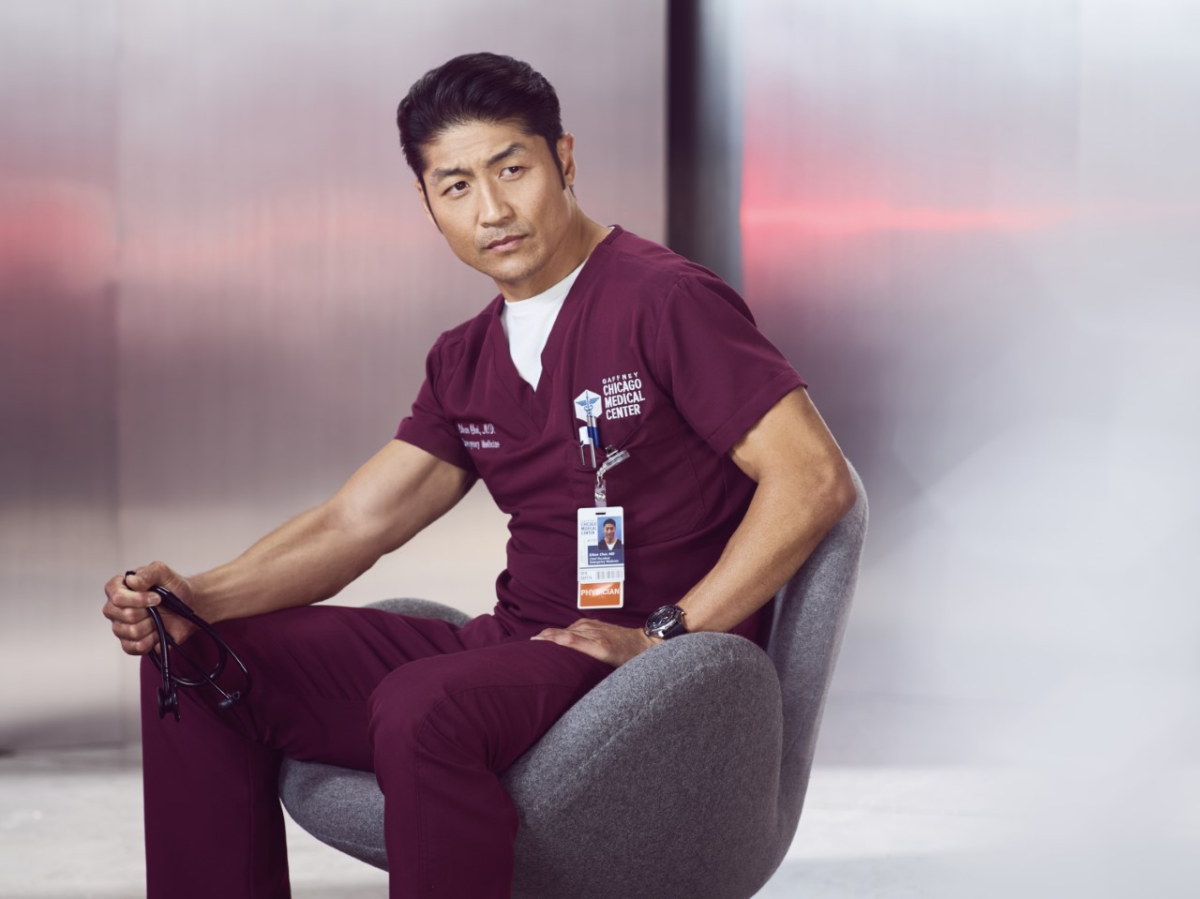
Steve Yuen portrays Glenn, the charismatic survivor of "The Walking Dead".

Steve Yuen portrays Glenn, the charismatic survivor of “The Walking Dead”.

Spoiler alert: I’m going to be talking about the events of Walking Dead up until Season 3, Episode 10. If you haven’t watched yet and don’t want the plot spoiled, don’t read on.

Hours after his reunion with long-lost brother Merle, Daryl has chosen his brother over his new family of survivors. After escaping from Woodbury with a banished Merle, Rick and Glenn are unwilling to bring him back to the prison; Daryl decides to strike out into the woods with his brother rather than abandon him to the wilderness. Blood, after all, is thicker than water, right?

But, it turns out, that after a year on the road with Rick and the gang, Daryl now shares less in common with his brother Merle than he thought. Upon hearing a baby’s cry in the woods, Daryl rushes to the aid of a Spanish-speaking (presumably Mexican) family about to be overrun by walkers. A flurry of crossbow bolts (as well as the best and most gruesome walker kill of the season thus far) later, and the family is safe although unable to communicate their confusion and gratitude to Daryl. Merle, who reluctantly jumped into the fray with his brother, immediately begins to raid the family’s car for food and supplies (as a “reward”), causing Daryl to threaten him with his crossbow so that the family can leave with their belongings intact.

Over the last few seasons, we've watched Daryl come into his own when outside of his brother's shadow. Following his reunion with Merle, Daryl's decision to confront his brother is pivotal.

Over the last few seasons, we’ve watched Daryl come into his own when outside of his brother’s shadow. Following his reunion with Merle, Daryl’s decision to confront his brother is pivotal.

It is this incident that helps Daryl realize a few things: 1) he is not his brother, and 2) he is innately a hero. A confrontation erupts between Daryl and Merle, and Daryl decides he must return to the prison. Merle, he hopes, will join him (after all, if Rick and company are his family, than they will have to learn to accept Merle, too), but he’s willing to leave Merle in the forest if needs be. Merle protests, arguing that there’s no way in hell that the survivors will accept him — they chopped of his hand, he fought against them as part of the Woodbury militia, he tried to kill Michonne, and he tried to kill “that Chinese kid”.

Which prompts Daryl to retort: “He’s Korean.”

The single exchange symbolized, in my mind, the spectacular characterization of Glenn in The Walking Dead and what his character has done to combat Asian American stereotypes in mainstream media. Glenn is a new class of Asian American character, one that I’m not sure we’ve seen on-screen before.

Unlike previous Asian American characters, Glenn is at once Asian American and incidentally Asian American. Conspicuous among other Asian American characters, Glenn’s racial background does not define or justify his presence. He’s not the computer whiz, the scientist, the intellectual, the geek, the doctor, the technician, or a host of other stereotypical roles typically relegated to the Asian token. Although it is implied that Glenn’s parents were strict, Glenn himself was a pizza boy prior to the zombie apocalypse and assumes the role of forager and fighter — not “medic” or “ninja”, two roles that might be stereotypically Asian yet fulfilled by other members of the group. In short, there’s almost nothing inherently stereotypical about Glenn and his presence in The Walking Dead

More importantly, Glenn’s thematic role in the group of survivors is striking. Glenn has repeatedly been described by many, including by the show’s executive producer Glen Mazzara, as “the heart of the show”. The Walking Dead is a show about losing one’s sanity in the face of insanity, and to tell that story, we witness many of the characters — Rick, Shane, Michonne, Andrea, Merle, and the Governor to name just a few —  descend into madness and barbarism as they slowly lose touch with their own humanity. But, Glenn is unique in this respect: he is intended to inspire the reader because unlike his fellow survivors, he has a strong connection with his own humanity and personal morality. Glenn’s attitude remains among the most recognizably pre-apocalyptic despite his post-apocalyptic zombie-killing environment. Glenn’s innocence and optimism — even in the face of grisly violence — is feel-good and inspiring, and the budding love he feels for Maggie suggests that happiness is still possible even during the apocalypse.

In short, while we as viewers are supposed to be compelled by Rick and his struggles with his personal demons, to root for Michonne and her samurai sword badassery, to be inspired by Daryl and his story of redemption, and to deplore the Governor and his growing sociopathy, we are supposed to identify with Glenn. Says Mazzara:

“Everybody loves that character; everybody’s rooting for that character. He may be tortured and sensitive, but he’s always a hero.”

Think about that for a minute. The Walking Dead is a TV show where the viewer is supposed to feel the closest kinship with Glenn, an Asian-American pizza boy in love with a southern belle.

The budding relationship between Glenn and Maggie has served to emotional ground the show in the face of otherwise incredible immorality and horror.

The budding relationship between Glenn and Maggie has served to emotional ground the show in the face of otherwise incredible immorality and horror.

In a genre that has long cast the Asian American as the villain, the foreigner, and the Other, Glenn stands in stark contrast. He is Asian-American, but his race does not define his membership in the cast. Glenn is an Asian American character, but he’s also an individual — capable of incredible heroism (like when he faced down a walker while tied to a chair, and emerged the victor) and profound emotional ugliness (like the rage he felt that Maggie, but not he, participated in the preliminary assault on Woodbury). He is a leader in the survivor group, assuming the role in Rick and Daryl’s absence, and his romantic relationship with Maggie is a thumbed nose to the stereotype of the desexualized Asian American male.

Television has historically treated its racial minorities much as Merle treats the non-White members of the survivor group: with disdain, irreverence and occasional downright racism. Merle is as dismissive as he is contemptuous of the group of “beaners” that he and Daryl saved in last night’s episode. Striking, then, that Daryl — who in Season 1 was little more than a younger clone of the racist backwater Merle — has spent the last eight months living and fighting alongside Glenn and the other survivors. He has come to see the humanity in Glenn, whom he referred to in Season 1 as “a Chinaman”.

The exchange between Daryl and Merle over Glenn's race in Season 3 Episode 10 hearkens back to a similar exchange between Daryl and Glenn in the first season.

The exchange between Daryl and Merle over Glenn’s race in Season 3 Episode 10 hearkens back to a similar exchange between Daryl and Glenn in the first season.

How far Daryl has come such that, at the moment of the climatic confrontation of his brother, he chooses to express his rebellion with the simple truth about Glenn: “He’s Korean.” Implicitly: He’s not “that Chinese kid”. He’s not what you assume he is based on the way he looks. It’s important to me that you know that he’s Korean, and it’s important to me that you know that he’s not just Korean.

We’re living during a time when Asian American characters seem more prominent than ever on television today: Lucy Liu as Watson on Elementary, Mindy Kaling on The Mindy Project, Jenna Ushkowitz and Harry Shum Jr on Glee, the bevy of Asian American actors and guest roles on Hawaii Five-O. Yet, while each character is remarkable and stereotype-defying in his or her own way, all remain explicitly racialized characters that fail to stray too far from their respective boxes. Liu and Kaling are both doctors, while Ushkowitz and Shum are specifically characterized (and treated) as the Asian kids at the predominantly White high school. Daniel Dae Kim and Grace Park are powerful and nuanced Asian American characters on Hawaii Five-O, but ironically they (and the many other Asian American guest stars who have appeared on the show) implicitly rationalize their appearance because the show is set in Hawaii; Kim’s stilted use of pidgin Hawaiian in his early episode portrayals of Chin-Ho Kelly was a source of some specific chagrin in the blogosphere.

By contrast, it’s the quiet strength of Glenn that rings as the truest, most sincere portrayal of what it means to be Asian American on television today. Glenn is Korean, true, but he’s so much more than that: he’s a forager, a survivor, a hero and, above all, just a person. And it is that person – with all of his strengths and failings — whom Daryl through his time on the road with the survivors has had a chance to get to know, and to come to see, not as a “Chinaman”, but as family.

And that’s something television should aspire to do with all its Asian American characters.

Update: You Offend Me You Offend My Family makes a similar argument in favour of Glenn: Why Glenn on ‘The Walking Dead’ is the Most Interesting Asian Male Character on American Television

In Defense of “The Men Who Built America”

Promotional image for “The Men Who Built America”.

Who built America’s railroads and why did they matter? Where did America’s electrical grid and gas stations come from? Why does everyone own a car? Why do we work a five day/40 hour work week?

These are the questions that the History Channel strived to answer with their four part documentary called “The Men Who Built America“, which focuses on America’s Industrial Age and the intertwining lives of five absurdly wealthy industrialists — Vanderbilt, Carnegie, Rockefeller, Morgan and Ford.

In an age when the History Channel spends most of its hours airing reality TV crap like “American Pickers” and “Pawn Stars” (which has about as much to do with history as PBS’ “Antique Roadshow”), the fact that even a fraction of the History Channel’s budget is still dedicated to producing and airing documentaries that involve actual history marginally restores my faith in mankind.

Further, in my experience, the teaching of American history often bounces from major military event to major military event. The time period between Reconstruction and the start of the first World War is often treated as just that — a time of peace between major wars when America was rebuilding (when most textbooks would assert that nothing of consequence happened). There is often a focus on the transcontinental railroad (and, in the Asian American historical context, a discussion of anti-Asian immigration laws, many of which were passed at the time), but mostly this period of American history is ignored in popular retelling.

Through the History Channel’s documentary, however, I personally learned a great deal about how the events during that American peacetime helped influence the way that America looks today. This era was a time of rampant capitalism and market free-for-all — before anti-trust laws, labour laws, or even income tax. And this was an era of profound technological innovations including the invention or popularization of kerosene, steel for large-scale construction, gasoline, electricity, and the combustion engine. In short, I found the documentary an informative unique perspective on American history.

Yet, there are a few internet memes out there that ridicule “The Men Who Built America”, presumably because it focuses on five rich White men in a documentary titled to the casual observer as if it were crediting the building of America solely to these five rich White men and not to anyone else. Stuff Black People Don’t Like, for example, remarks “Wait, I thought it was Black people who built America while white people sat around drinking.”

Where are the women or the people of colour?

Honestly, I find this criticism a little absurd.

It’s true: the documentary doesn’t tell the story of women or people of colour and their roles in shaping America during the Industrial Age. It doesn’t focus on suffrage, or Reconstruction, or the Chinese Exclusion Act, or other political instances that involve the intersectionality of disenfranchised groups with American history. But, is the historical perspective of this documentary invalid because it doesn’t?

The impact of the five industrialists profiled in “The Men Who Built America” is persuasive. We learn about how America’s most successful industrialists were men who took advantage of the unregulated market to build and maintain obscene amounts of wealth that, correcting for inflation, could make up a substantial chunk of America’s debt today. We learn about how the greed of these men helped permit faster-than-horse travel by rail in America for the common man; helped build the first oil pipelines; helped build the first power grid in America to bring electric lights to every home; helped build America to build up rather than out to create the modern skyline; and helped build the first automobiles priced so that they are accessible for the average working man.

There’s an episode dedicated to the feud between (J.P. Morgan-backed) Thomas Edison and his DC electricity design, and Nikola Tesla (pictured above, portrayed by Alex Falberg) and his new AC technology that would make the founder of The Oatmeal proud. Spoiler alert: Tesla wins.

We learn, also, about how the greed of these industrialists created the backlash that helped birth the notion of collective bargaining and the modern labour movement (in turn responsible for the modern workweek and the concept of both minimum and liveable wages); how the accumulated wealth of Wall Street was able to purchase an American presidency, inspiring modern campaign finance laws; and how the incredible influence of these industrialists inspired the anti-trust lawsuits that have now been codefied into modern American anti-trust law.

In short, the documentary “The Men Who Built America” doesn’t actually claim that these industrialists single-handedly built America (or that they even ever got their hands dirty in a steel mill or an oil refinery plant), but it does claim that they did heavily influence the building of our modern concept of what America is through the use of their money and associated political power.

It’s gratifying for progressives to make fun of things like “The Men Who Built America”, putting together silly memes that express outrage at the exclusion of non-White, non-male historical figures in this documentary. This outrage comes from a valid and understandable place: the teaching of American history has long ignored the contributions of women and people of colour. I firmly believe that ethnic studies and womens’ studies programs — academic programs focusing on the historical and contemporary contributions of minorities and women — help to rectify this absence by offering alternative perspectives on our common history that are more inclusive.

But those of us who advocate for a more inclusive telling of American history must be wary of letting our outrage seep into a place where we are dismissive of the contributions and influence of White men to our history. After all, there’s a simple fact that we cannot ignore: during the Industrial Age, women and minorities were still largely oppressed, and through that oppression denied access to the kind of political and economic power that permits a person to wield significant influence over the direction of America. Thus, we must acknowledge that there was a time when a great deal of the influential people in American history are going to be White men — these were the only people who had the power and privilege to be influential.

And, considering that the five industrialists profiled in this documentary together controlled monopolies on rail, gasoline, kerosene, electricity, manufacturing and steel — all the major technological innovations of the day — and were even able to purchase a presidency, these five industrialists weren’t just “influential”; they were the textbook definition of influential to the shaping of America. There was a period of time when three of these industrialists alone and collectively wielded more money and power than the U.S. federal government at the time; and even a time when they actually banded together like a real-like Injustice League to sway an American election. It would be stupid to suggest that these men did not have a hand in building what we conceive of as America today.

If these three men (on the right) were the Crime Syndicate of America, we decided that Rockefeller (left, a little farther back) would be Ultraman and  J.P. Morgan (right) would be Owlman. Which leaves Andrew Carnegie (center front) as Superwoman. Vanderbilt (far left) is also pictured but lost much of his power during the heyday of this triumverate of corporate evil.

To that end, a measured telling of the contributions of folks like Andrew Carnegie, John D. Rockefeller, and J.P. Morgan on modern America (and progressive politics) is worth teaching, even if it means focusing on five industrialists who were all White men.

What frustrates me the most about these Internet memes is that it feels as if progressives criticizing “The Men Who Built America” do so without having actually seen the documentary. Yes, the History Channel’s choice of this documentary’s title is sensational, but the documentary itself was often quite critical of the five industrialists it profiled. It was also highly informative about a period of history often ignored because there wasn’t any war happening at the time.

In summary, advocating for an inclusive teaching of American history that includes the contributions of non-White, non-male peoples is damaging when we let that turn into being exclusive of the teaching of American history from the perspective of White males; yet, this is precisely what I think the lampooning of “The Men Who Built America” — particularly from a place of being ignorant of what the actual documentary says — does. It communicates that in reaction to the fact that the traditional telling of history is selective for the contributions of White men, our side doesn’t want to broaden the telling of history; instead, we want to tell a different kind of selective history.

As you can expect, this is a doomed, and anti-intellectual, strategy.

Rather than to lampoon ”The Men Who Built America” from a place of exclusion wherein we deny the relevance of this documentary’s subject matter, we should instead focus our energy towards encouraging the History Channelto  devote equal resources to telling the story of, say, “The Women Who Built America”, or “The African Americans Who Built America”, or “The Asian Americans Who Built America”, and so on.

Also, it’s always better to have seen something before you assume it is racist and dismiss it. That’s just a general rule of thumb.

America’s Best Dance Crew Cancelled; Number of Asian Americans on TV Drops Over-Night

News broke yesterday from MTV that Randy Jackson’s “America’s Best Dance Crew” reality TV show, which pitted dance crews against one another in a contest to create and execute weekly themed dance routines, has been cancelled after seven seasons. The show launched several Asian American dance crews to popular fame, including UC Irvine’s Kaba Modern and Season 1 winners JabaWockeeZ.

Also, ABDC might be able to take credit for launching the career of this guy. No, not David Morrissey who plays the Governor on AMC’s “The Walking Dead”. I meant, Mr. Fancy Red Pants over there, who is Laurence Kao of Kaba Modern. (H/T: Angry Asian Man)

It’s sad because ABDC singlehandedly proved to America at-large that Asian Americans, too, have rhythym.

Or, alternatively, that Asian Americans from California are preternaturally good at standing on our heads?

So, it’s with a heavy heart that we say good-bye to ABDC and its unspoken mission statement to showcase the incredible cool of Asian American dance crew.

And, in a completely unrelated note, this morning, the number of Asian Americans on television mysteriously and precipitously plummeted.

Daniel Dae Kim Hosts GOTV Contest; Is the Coolest Celebrity on the Planet

Daniel Dae Kim is the coolest celebrity on the planet.

If ever you needed proof that Daniel Dae Kim, of Lost and Hawaii 5-0 fame, is the coolest celebrity on the planet, here’s the skinny on a Get Out the Vote contest he’s hosting for his Twitter followers:

Hi folks-

In an effort to encourage all of us to vote I thought I might do more than your usual PSA or well meaning-tweet. I’ve decided to hold a little online contest where the winner will get to spend some time here in paradise and visit the set of Hawaii Five-0.

Here’s what you need to do to enter:

1. GO OUT AND VOTE! It doesn’t matter whether it’s early voting, absentee voting, or the old fashioned go-to-the-polls kind. It doesn’t even matter who you vote for. Just get out there and do your thing.

2. Show me proof. Take a picture of yourself at the polling station, or with your postage ready absentee ballot – something to show me that you did your part to shape the future of our country. Then ATTACH THE PHOTO TO A TWEET AND SEND IT TO ME WITH THE HASHTAG: #iVoted

3. Wait until November 9, when I will go through the submissions FROM THOSE WHO FOLLOW ME ON TWITTER and announce the winner!

How will I choose the winner?

I will copy all of the tweets from followers who attached their photo along with the hashtag #iVoted and store them starting today, so early voters get just as much of a chance as those who vote on November 6th. In fact, voting early will probably help you get noticed and counted since so many more of us will be voting on Election Day.

The more definitively you can show me you voted, the better your chance of winning. If it’s kind of questionable based on the pic, I may not count you in for the final round. On the other hand, if you take the time to show me a little flair or creativity with your post or photo, it may not guarantee you’ll win, but it will definitely help you catch my eye and get put into that final selection group. From there, I’ll pool all the eligible submissions and choose someone randomly.

Once chosen, the winner will be personally contacted by me on twitter, and we’ll start making travel plans!
I’ll fly you and a guest to Honolulu from wherever you live in the CONTINENTAL US, ALASKA or even HAWAII (in case you don’t live on Oahu :) .

You and your guest will stay at the Modern Hotel in Waikiki (courtesy of me and the good folks there), where you’ll stay for 3 nights. All travel should be complete by the end of February 2013.

On one of those days you’ll also get to visit the set of Hawaii Five-0 as my guest and watch us shoot.

That’s it! Now I’m kinda new at this whole contest thing, so I don’t know all the legal mumbo jumbo, but hopefully everyone who participates will do it in good faith just like I am. Feel free to retweet this link to all your friends, but be sure to tell them that if they want to participate, they must follow my account so I can be in touch with the winner.

*Finally, as a little added BONUS, on Election Day I’ll go online to hold a live tweet session (I’ll let you know the time later) with all those who entered, just to say thanks for doing your part.

Thanks so much for reading this very long post, and thanks even more for voting. In the election of 2000, a difference of only 536 votes decided the presidency of the United States. Your vote CAN make a difference. Let’s make it count.

Good luck!

Getting to participate in the American Democratic process and getting the chance to hang out with the super-awesome (and need-I-say-it genuinely good-lookin’) Daniel Dae Kim and castmates on the beaches of Hawaii? I am so bummed I’m Canadian.

K-Town, Episode 3 Recap (Part 2): Soju is the Relationship Killer (Spontaneous Dance-Off Edition)

Spoiler alert! Which hopefully you would have figured out by the word “recap” in the title.

(If, like Young, you missed all of the drama between Jowe “Prince of K-Town” Lee and Violet, you can check out Part One of this recap here.)

While Jowe “Prince of K-Town” Lee and Violet are having their roller coaster relationship drama in Hookup Hallway, Steve pulls Cammy aside to confess his disappointment that Young has forsaken bachelorhood to propose to an overseas chick that apparently none of the cast were even aware existed until Young’s Episode 1 engagement announcement. Young is his wingman, complains Steve, but now he is alone.

That's right -- because your boy getting married is really all about you.

But, Cammy is quick to point out that Steve should be happy for Young (which he should) and that Steve has other friends. Cammy, in fact, will volunteer to be his new wingman!

Cammy is totally like Young. Except, y'know, cute and with ovaries.

Now, I’m also one of those chicks who will drunkenly volunteer to play wingman for my single guy friends. Let me make a confession to you all now, while I’m good and sober: I am a terrible wingman. I don’t know how to be a wingman. I have no idea what qualities are even useful in a good wingman. My idea of being a good wingman is pointing at girls at the bar or on the dancefloor, and trying to harass my single guy friends into talking to them, getting frustrated, and then launching my drunken self at these same girls in hopes of starting a conversation myself. That, or hurling insults at them from across the bar, in hopes of starting fights with them (did I mention that I’m an angry drunk?). While I’m not going to turn this into some sort of “girls can’t be good wingmen” thing, I hope that Cammy is a better wingman than I am. For Steve’s sake.

On the other hand, I hope Cammy is as terrible a wingman as I am. For the sake of all of us K-Town viewers. Because that shit would be all kinds of hilarious and all kinds of guaranteed failure.

Either way, if Steve’s depression over losing Young as wingman is to be believed, than being a good wingman is nothing like what I thought it was. Specifically, being a good wingman involves doing one thing, and doing it as often and as publicly as possible, preferably whilst standing on a table and pointing at a woman of sexual interest: crotch-grabbing.

That's right. Crotch-grabbing. Or, Accelerated Public Masturbation.

This is clearly why I suck at being a wingman. I had no fuckin’ clue that wingman-ery entailed dry-humping your hand like a miniature poodle that’s just found a wayward stuffed animal on the floor, and has decided to mount its ear with frenzied hip thrusting.

In my mind, there are only a few reasons why anyone should be grabbing their crotch in public:

Readjustment of penis orientation between left and right pant leg.

Bladder incontinence.

Sudden herpes outbreak.

Your ball sack is on fire.

Now, as a straight woman, I really am no expert in pick-up techniques employed by men to signal their interest in a woman. But, as a straight woman, I don’t think that a guy spying me from across a crowded room and immediately trying to jerk it, is — in. any. way. — attractive.

"Girl, you make me so hot I'm going to play with myself through my pants right here while I'm standing six feet away from you and, and -... uhhhhh. Can I get your number... and a moist toilette?"

But, hey, what do I know? Apparently, Young’s frenzied jerking was a turn-on for the members of S2K, a girl dance group that “just happened” to be hanging out at S-bar the night of the K-Town shoot. In a “completely non-scripted manner”, Young approached these chicks with hero worship in his eyes, grabbed his crotch and… spontaneous dance-off! Because, of course, that’s how folks party in K-town.

Sadly, the spontaneity was just too… well, spontaneous… for Joe “Party Nazi” Cha’s tastes, who rushed in to apply much needed rules to the dance-off.

"What's this? Unstructured, unscheduled fun?!? This well never do! You must divide yourselves into two groups and engage in competitive dancing, STAT."

Now, sadly, the wonderful producers of K-Town edited out Joe’s rules, so I have no idea who won the dance-off. But I do know who lost: Steve Kim. Scarlet described Steve’s dancing in — in my mind — the best line of the episode:

"It was like if a fairy raped a crippled girl, and gave birth to Steve's dancing."

Although, I don’t think Scarlet was being entirely fair. I think Steve’s dancing was a perfect, gold-star, homage to this guy:

... and come on -- he's the LORD of the dance.

One spontaneous dance-off later, and Party Nazi moves us on to the “dare” portion of the evening, by reminding Steve that Cammy owes him a dare for having lost an Apollo 13 challenge to Steve earlier in the night. Steve — like most drunken single men — dares Cammy to make out with a random S2K dancer (whose only crime, I think, was being within Steve’s line of sight).

These are the faces of two chicks who 1) clearly don't know each other, and 2) clearly don't want to make out with each other. Steve should've stopped right here; because watching two people disinterestedly and perfunctorily kissing is TOTALLY HOT.

Now, it’s never made entirely clear what problems Cammy has with this dare (she says in her confessional “anything but that”). Is she shy?  Homophobic?  Turned off by the misogynistic implications of having her sexuality co-opted, against her will, for the male gaze of her peers? Does her breath stink? Either way, it doesn’t really matter: the point is that Cammy doesn’t want to, and Steve should’ve known better. Which results in (as Steve puts it):

"Fuck you. Motherfucker. Fuck you. Fuck you. Fuck you. Motherfucker."

Eventually, after a few long-eyed puppy dog looks from Steve for getting verbally reamed out by Cammy, the two resolve their differences. I sort of hope that later in the season, it will get revealed exactly what Cammy’s problem was here. But we do know that when Cammy gets a) too much soju, and b) asked to kiss another girl, her language skills devolve into profanity-laden Tourette’s.

Whatever Cammy's problem was, at least they were able to hug it out.

By the way, while Cammy was having her f-bomb implosion, did anyone catch the camera pan to this for a split second? I missed it the first eight times I saw this episode (yeah, these recaps take forever to write, guys), but caught it just now. Seriously, Violet? What the hell kind of emotional masochism are you into, girl?

This is the dictionary definition of "mixed signals".

Not surprisingly, as the party winds to a close, the night ends with a Round 5 for the Prince of K-Town.

Giggity.

The moral of episodes 2-3 of K-Town: excessive soju leads to incredibly poor relationship decisions, f-bombs and strained friendships, and catfights with random pantsless smoking girls. I feel like there needs to be some sort of after school special.

Tune in later this week, when I recap Episode 4, in which Jowe calls someone “the Asian Jolly Green Giant”.